Affordable Pickleball Court Builders in Las Vegassss
Build your dream pickleball court without breaking the bank! We offer affordable, high-quality court construction, resurfacing, and conversions for homes and businesses. Get a free, no-obligation quote today!
Imagine this: The sun's dipping low, your family's gathering in the backyard, and that pristine pickleball court you've always craved is finally yours—not some cookie-cutter concrete slab, but a custom haven of smooth lines, perfect bounce, and endless rallies that turn ordinary afternoons into legendary showdowns.
But here's the dirty secret that's kept you sidelined: Those big-shot contractors hit you with quotes that could fund a small country's pickleball league, leaving your wallet wheezing and your dreams dusted off like last season's paddles. What if I told you there's a way to flip that script? Our team cracked the code on delivering pro-grade courts that play like a dream, without the nightmare price tag.
Grab our no-obligation quote today, spill the details of your vision, and watch us blueprint a budget that fits like a glove. Don't let another summer swing by without a pickleball in your backyard. Hit reply now, and let's smash this thing together!
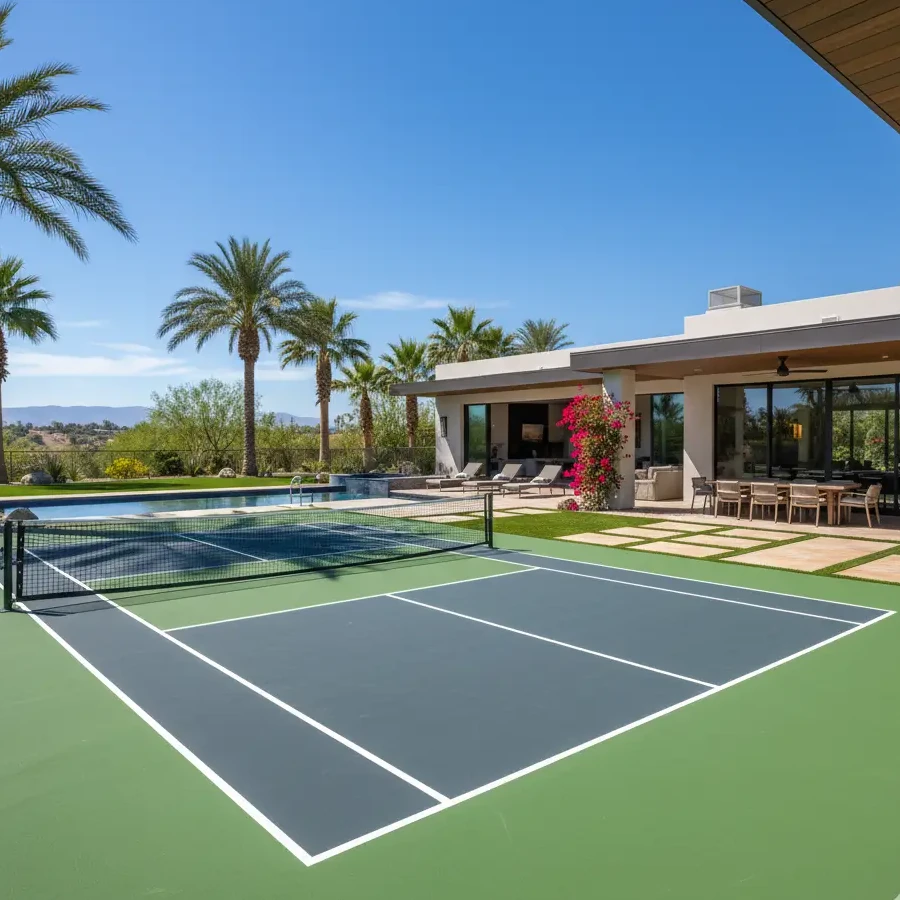
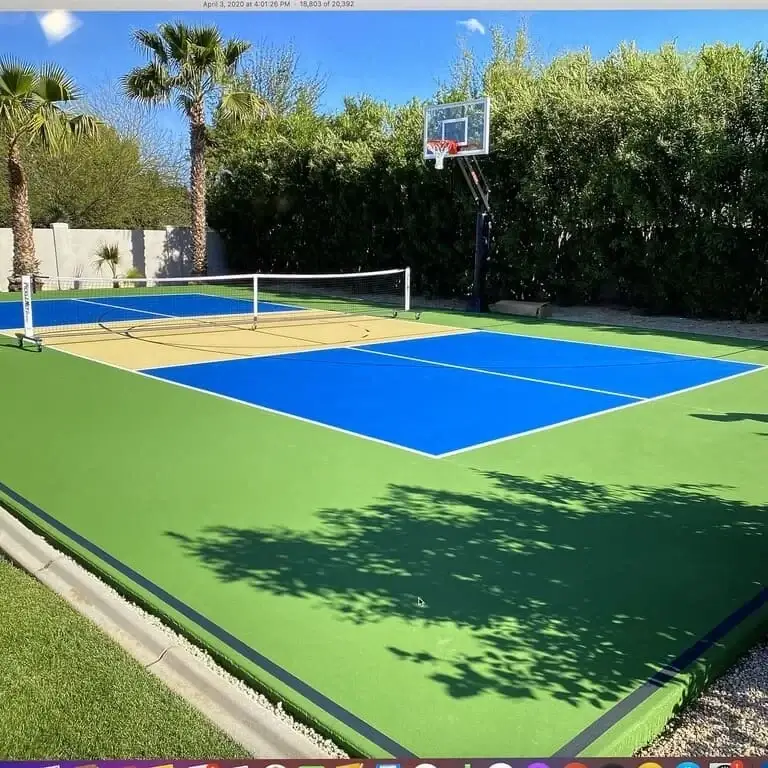
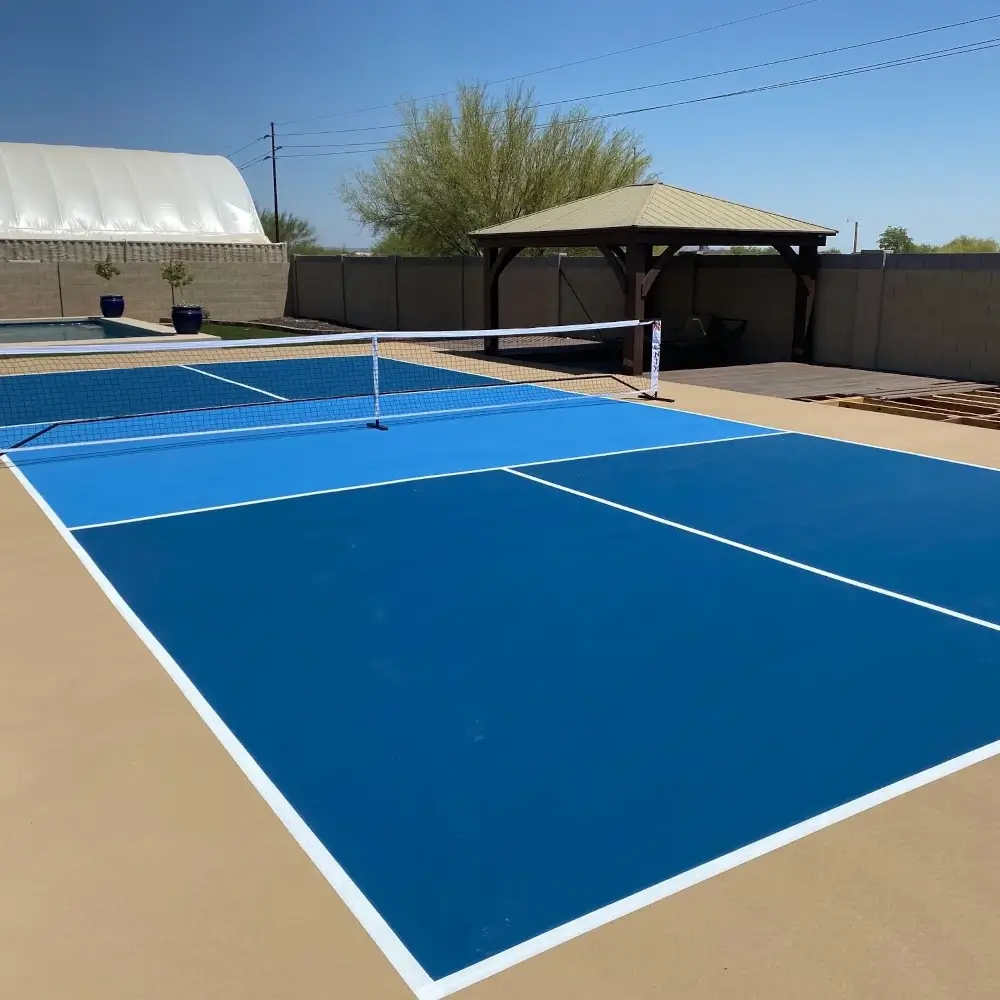
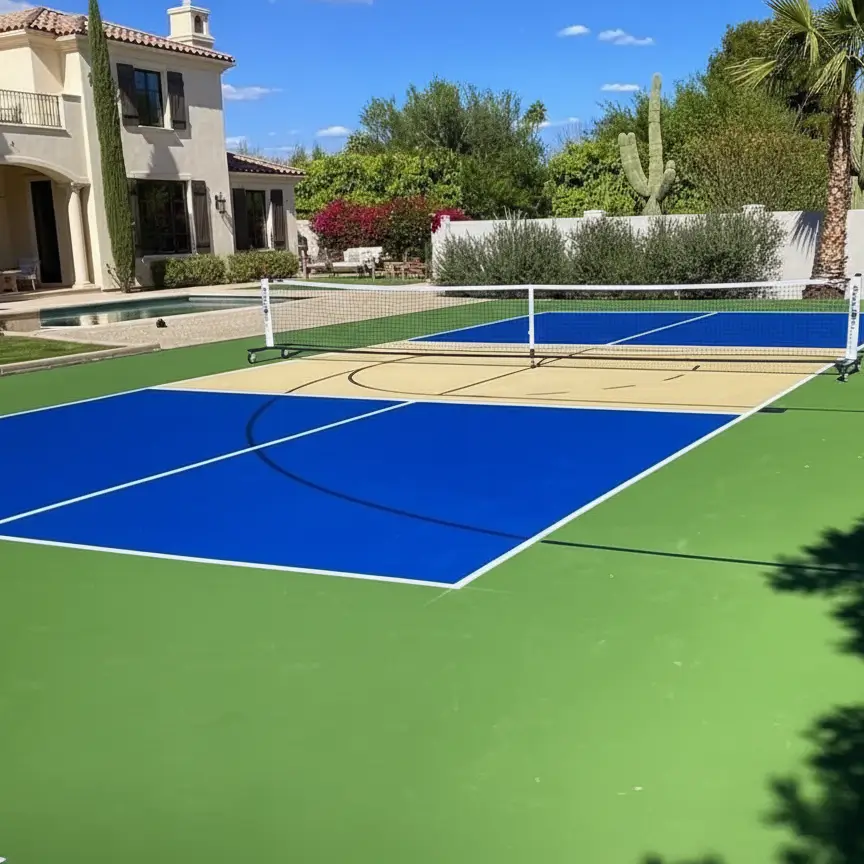
- Las Vegas
- North Las Vegas
- Henderson
- Pahrump
- Summerlin
- Paradise
The process begins with reaching out to professional sports court contractors for a detailed quote and consulting on your project.
Provide the contractor with the proposed court location, desired dimensions (a minimum total playing area of 30' x 60' is recommended, with the court being 20' x 44' ), and any requested features like lighting and fencing.
The contractor will evaluate your site's topography, soil conditions, and accessibility, as these factors significantly influence the cost and complexity of site preparation (e.g., grading, excavation, drainage).
Once the plan and quote are approved, the contractor will prepare the land and construct the court's foundation.
This involves clearing the area of all debris, excavating the soil, and grading the land to a specific slight slope (typically 1% or less) for proper water drainage. Next, a stable foundation is installed, which is usually a compacted aggregate base followed by a surface of asphalt or a concrete slab (often reinforced with rebar or post-tensioned cables for durability).
Proper site work and foundation are critical for the court's longevity, preventing future cracking, drainage issues, and uneven play surfaces.
With the foundation cured (especially important for concrete), the playing surface is applied, and the court lines are marked.
An acrylic or similar non-slip coating is applied to the asphalt or concrete base. This specialized court coating provides a vibrant, durable, and safe playing surface. Once the surface is ready, the regulation lines are painted, including the sidelines, baselines, centerlines, and the crucial non-volley lines (or "kitchen" lines) which are 7 feet from the net. All lines are typically 2 inches wide and white.
The surface must be applied in suitable weather conditions, and the striping must adhere to USA Pickleball (USAP) standards for official play.
The final step is installing the required equipment and any additional features.
Permanent net posts are set in their foundations, and the net is strung, with the height set to 36 inches at the sidelines and 34 inches in the center. Fencing (if included) is installed to keep balls in play, and lights are mounted for night use. This completes the court, making it ready for play.
If installing lighting, the poles should be positioned correctly to illuminate the court evenly without blinding the players, and all electrical work should be done by a licensed electrician.
What is Pickleball?
Pickleball has become incredibly popular over the last five years, and for good reason. It is played on a court that is 1/3 the size of a tennis court, with a net that is slightly lower than a tennis net, and with solid paddles.
The game can be played as singles or doubles, but it is best known for its doubles format. A non-volley zone exists near the net where players can't hit the ball while it is in the air. This makes the game more interesting and creates longer rallies.
- Easy to Learn: The rules are basic and really easy to learn, which allows beginners to start playing competitively immediately.
- Less Physically Demanding: The court is smaller, the ball is lightweight, and underhand serving are easier on the joints than high-impact sports like tennis. This makes it more enjoyable and safe for people of all ages and fitness levels.
- Inclusivity: It's genuinely a cross-generational sport, allowing families, friends, and mixed age groups (from kids to seniors) to play together on an equal footing. Many communities have established leagues and open-play sessions that foster a strong sense of community.